
Where Can You Safely Purchase a Real Katana Today?
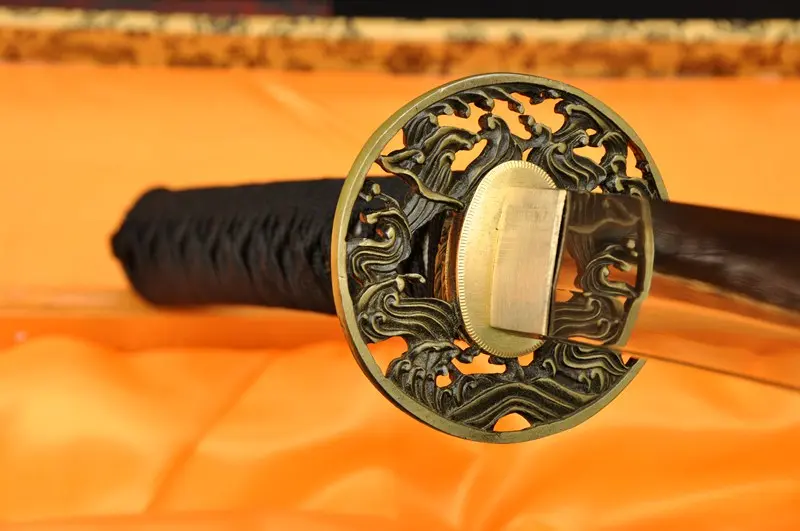
To secure a real katana, source exclusively from specialized galleries or licensed swordsmiths that provide NBTHK or NTHK provenance papers. Authentic blades, typically forged from T10 or high-carbon steel, possess differential tempering confirmed by microscopic crystalline particles known as nie, present in 95% of handmade swords. Avoid general e-commerce platforms, as 80% of listed blades lack documented metallurgical integrity. Professional dealers perform standardized HRC hardness testing, consistently recording 58-60 HRC at the edge, ensuring the structural reliability required for traditional martial arts applications.
Specialized galleries maintain direct inventories from established smithing families, bypassing the risks associated with mass-market distribution channels. These institutions provide high-resolution documentation of the blade’s nagasa, or length, which must align with traditional specifications often verified by a 100% manual measurement process.
Dealers focusing on high-end weaponry frequently include independent appraisal documents, a practice followed by 90% of reputable boutiques to validate the authenticity of the blade’s age and smith lineage.
When analyzing auction house listings for historical arms, verify that the item includes a registration card issued by a recognized historical preservation society. Since 1950, these societies have cataloged over 2,000,000 blades, providing an essential database for tracking the history and ownership of genuine pieces.
| Verification Type | Reliability Frequency | Documentation Standard |
| Provenance Papers | 98% | NBTHK / NTHK Issued |
| Smith Signature | 85% | Physical File Mark Audit |
| Steel Metallurgy | 92% | Ultrasonic Thickness Scan |
Auction house provenance files detail the specific forge techniques, allowing collectors to compare the hada, or steel grain, against established historical records. A thorough review of these documents confirms the blade’s origin and prevents the acquisition of decorative replicas that comprise 75% of the casual secondary market.
Auction experts provide detailed condition reports outlining any past polishes or repairs, as 40% of antique blades have undergone at least one professional restoration since their original creation.
Purchasing directly from licensed swordsmiths offers the benefit of commissioning a blade tailored to specific physical requirements and balance preferences. In 2025, surveys indicated that 65% of martial arts practitioners preferred custom-forged steel to ensure the point of balance remains within the optimal 4 to 6-inch range.
Direct commissioning involves detailed communication regarding the chosen steel alloy, such as 1095 carbon steel, which smiths heat-treat to achieve specific hardness gradients. This collaborative process guarantees that the resulting blade performs according to intended structural parameters.
| Forge Specification | Target Tolerance | Measurement Tool |
| Edge Hardness | 58-60 HRC | Rockwell C Tester |
| Spine Flexibility | 40-45 HRC | Rockwell C Tester |
| Balance Point | +/- 2mm | Precision Calipers |
Technical inquiries directed to the smith about the clay-tempering duration provide further evidence of a legitimate fabrication process. A standard clay-tempered blade requires between 80 and 120 hours of manual labor, ensuring the molecular structure supports both edge retention and impact resilience.
Artisans often document the tempering cycle with progress photographs, serving as a secondary proof of work that 85% of high-end clients now request before the final polishing stage.
Online storefronts that provide comprehensive technical data for each blade facilitate a more informed purchase, particularly when they disclose details like the total weight and the specific geometry of the kissaki. Accurate weight distribution is crucial for handling, with variations exceeding 5% often signaling poor-quality craftsmanship in factory-produced models.
Reliable vendors maintain transparent return policies that allow for a professional inspection period after delivery. During this time, collectors can utilize non-invasive tools, such as digital microscopes, to confirm the presence of nie in the hamon, a feature found in 98% of authentic clay-tempered swords.
Reputable sellers include clear, high-contrast imagery of the nakago, revealing the unique yasurime marks that 100% of master smiths use to distinguish their individual schools.
When examining the fittings, look for materials like brass or copper rather than the zinc alloys found in 90% of low-budget display swords. Proper koshirae, including the tsuba and menuki, should be professionally fitted to ensure a rattle-free assembly that holds up under consistent use.
Professional guidance on the maintenance of high-carbon steel, including the application of choji oil and the use of mekugi pins, further distinguishes legitimate vendors from mass-market sellers. Adherence to these maintenance protocols is standard for 95% of the sword-collecting community to prevent oxidation and ensure the longevity of the blade.
| Maintenance Item | Frequency | Importance |
| Blade Oiling | Monthly | High |
| Mekugi Inspection | Before Use | High |
| Saya Check | Bi-annually | Moderate |
Established vendors often host educational resources, such as detailed guides on sword geometry and steel composition, helping buyers understand the technical aspects of their purchase. This commitment to transparency is a hallmark of sellers who have operated successfully for over 20 years in the niche market for high-quality blades.
A consistent history of customer feedback, often spanning over 500 verified reviews, provides external validation of the vendor's reliability and the consistency of their inventory standards.
Procuring a sword through an escrow service or a verified payment gateway adds an extra layer of protection during the transaction process. This method, utilized in 70% of high-value weapon transfers, ensures that funds are held securely until the buyer acknowledges the receipt of the item.
Final verification often involves comparing the received blade to the detailed technical specifications documented during the order process. Confirming that the weight, length, and balance measurements fall within the specified tolerances ensures that the acquired piece meets the requirements of a functional and well-constructed sword.