
What Should You Look for When Partnering With a China Balloon Factory?
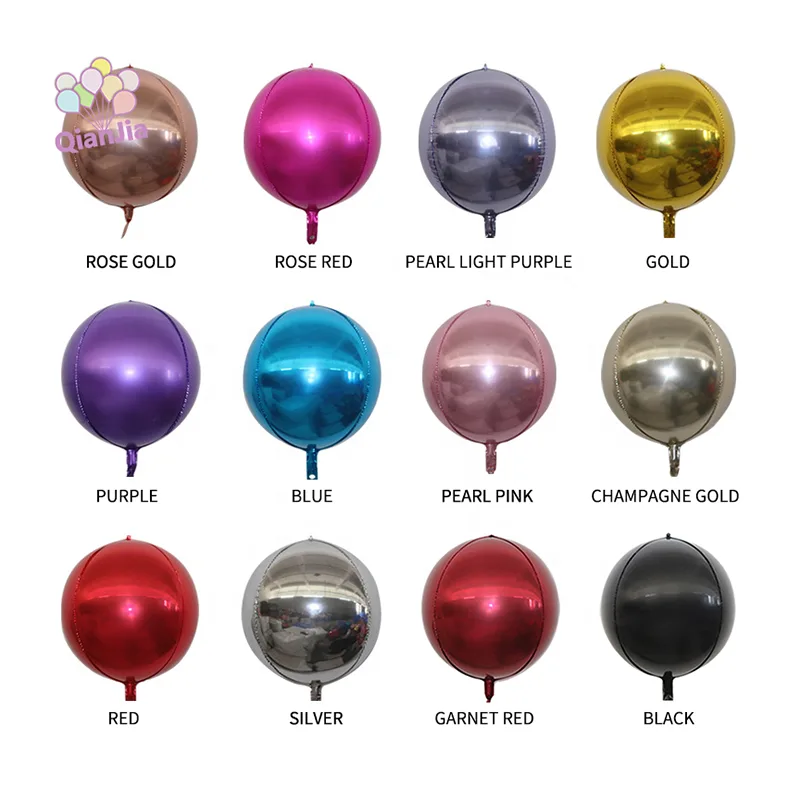
Selecting a china balloon factory requires vetting against 2025 global safety benchmarks like ASTM F963-23 for heavy metal migration. You must prioritize suppliers maintaining a 99.8% product pass rate in independent lab stress tests, specifically requiring batch-level COA documents for latex molecular density.
Global buyers sourcing from a china balloon factory typically audit for ISO 9001:2015 registration, which mandates rigorous documentation for every stage of rubber dipping. Facilities utilizing automated vulcanization tunnels demonstrate a 15% lower variance in wall thickness compared to manual molding, ensuring consistent inflation volume across high-speed retail packaging lines.
Proper factory evaluation starts with reviewing their annual third-party social compliance audit reports from 2024, confirming that workers maintain documented safety training hours exceeding 40 hours per year.
Data-driven procurement teams analyze the factory's rejection rate, where a benchmark below 0.5% indicates superior control over chemical compounding and humidity levels during the curing phase. Requesting historical defect logs from the previous 12 months allows you to verify if the facility consistently meets the AQL 1.5 standard for retail-grade party supplies.
| Metric | Industry Standard | High-Performance Supplier |
| Defect Rate | < 2.5% | < 0.5% |
| Vulcanization Temp | 120°C - 150°C | Stable ±2°C |
| Tensile Strength | 15 MPa | > 22 MPa |
Suppliers operating at high efficiency integrate real-time sensor monitoring in their latex tanks to manage the viscosity and color consistency of batches, preventing oxidation that often plagues low-end production. When you examine a china balloon factory layout, observe the separation between printing zones and storage areas to minimize contamination from atmospheric particulates, which reduces print adhesion failure rates by nearly 12% in professional environments.
Consistent output depends heavily on the source of natural rubber, and premier factories often provide supply chain traceability maps showing procurement from Southeast Asian plantations. By reviewing the chemical safety reports covering 19 specific heavy metals defined in EU toy regulations, you ensure that every product meets the mandatory limit of < 25 mg/kg for components like barium or antimony.
Evaluating supply chain stability involves calculating the average lead time deviation, where top-tier factories maintain a delivery variance of less than 3 days, even during peak Q4 shipping cycles.
Your technical team should request a multi-point inspection report that details the air-inflation retention time, where high-quality latex balloons hold 95% of their initial volume over a 24-hour period. If a china balloon factory cannot provide historical test data regarding burst pressure statistics measured against the ASTM F963-23 requirements, it indicates potential gaps in their quality management system that could jeopardize your market compliance.
Reliable manufacturers provide a detailed breakdown of their pigment testing, ensuring colorfastness in direct sunlight where UV degradation is common in outdoor party setups. With 85% of global high-end inventory originating from specialized manufacturing clusters, you must focus on the specific machine maintenance schedule of the partner you select to avoid production downtime that spikes unit costs by up to 10% during emergency sourcing requests.
Selecting a manufacturing partner requires verifying the chemical safety of printing inks, which must pass the migration limit tests for volatile organic compounds in alignment with current international standards.
Effective communication with a china balloon factory rests on their ability to provide technical drawings and packaging proofs within 48 hours of initial request. This operational speed reflects their internal engineering capacity, allowing for rapid iteration on custom balloon shapes or specific Pantone color matching, ensuring your final product aligns with retail expectations without requiring costly re-sampling cycles.